
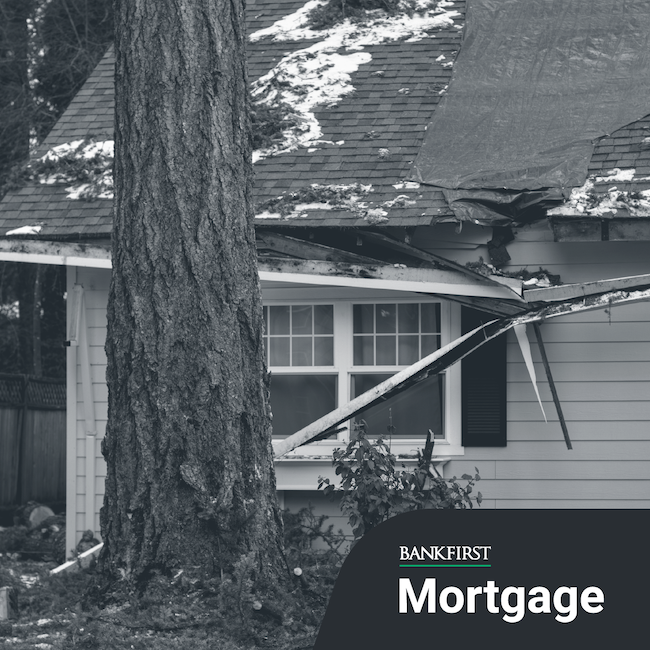
Severe winter weather can leave more behind than snow and ice. Even after power is restored and roads reopen, the impact on your home may take weeks to fully reveal itself. Hidden damage, lingering moisture, and delayed repairs can turn into costly issues if left unaddressed.
As neighbors who live and work in the same communities you do, the BankFirst Mortgage team encourages homeowners to take a thoughtful, proactive approach in the weeks following a winter storm.
Below are practical steps to help protect your home, your investment, and your peace of mind.
Some damage isn’t immediately visible during or right after a storm. As temperatures rise and snow or ice melts, take time to do a second, more detailed inspection.
Look for:
New water stains on ceilings or walls
Soft spots or discoloration in drywall
Cracks in foundations, steps, or exterior brick
Loose shingles, flashing, or gutters
Warping around doors and windows
Catching these issues early can help prevent more extensive damage later.
Winter storms often bring melting snow, ice dams, and frozen pipe issues—all of which can introduce excess moisture into your home.
Pay close attention to:
Basements and crawl spaces
Attics and insulation
Closets along exterior walls
A musty smell, visible condensation, or unexplained allergy symptoms may indicate moisture problems that need attention.
Even if your pipes didn’t burst during the freeze, slow leaks can appear days or weeks later.
Be sure to:
Monitor your water bill for unusual increases
Listen for dripping sounds when water isn’t in use
Inspect under sinks, behind appliances, and around water heaters
If you notice changes in water pressure or temperature consistency, it may be worth calling a professional.
Your home’s exterior is its first line of defense against future weather events. Once it’s safe to do so, evaluate outdoor areas that may have taken a hit.
Focus on:
Rooflines and soffits
Fencing and decks
Driveways and walkways
Trees or limbs that could pose a future risk
Clearing debris and scheduling repairs sooner rather than later can help prevent additional problems when the next storm arrives.
Even weeks after a storm, it’s smart to keep organized records of:
Photos of damage (before and after repairs)
Contractor estimates and invoices
Maintenance or inspection reports
These records can be helpful for future planning, resale value, or simply staying informed about your home’s condition.
Once repairs are underway or complete, consider what you can do now to reduce risk next time.
Helpful steps may include:
Adding insulation or sealing drafts
Scheduling annual HVAC and plumbing inspections
Installing smart leak detectors or temperature monitors
Trimming trees near your home
A little preparation can go a long way toward protecting your home in future seasons.
At BankFirst Mortgage, we believe informed homeowners make confident decisions. Our team is always here as a trusted local resource—ready to answer questions and support you through every season of homeownership.
We've been helping customers afford the home of their dreams for many years and we love what we do.
Company NMLS: 454063
www.nmlsconsumeraccess.org
900 Main Street
Columbus, MS, 39701
Phone: (662) 328-2248
Email Us

 Powered By LenderHomePage.com